
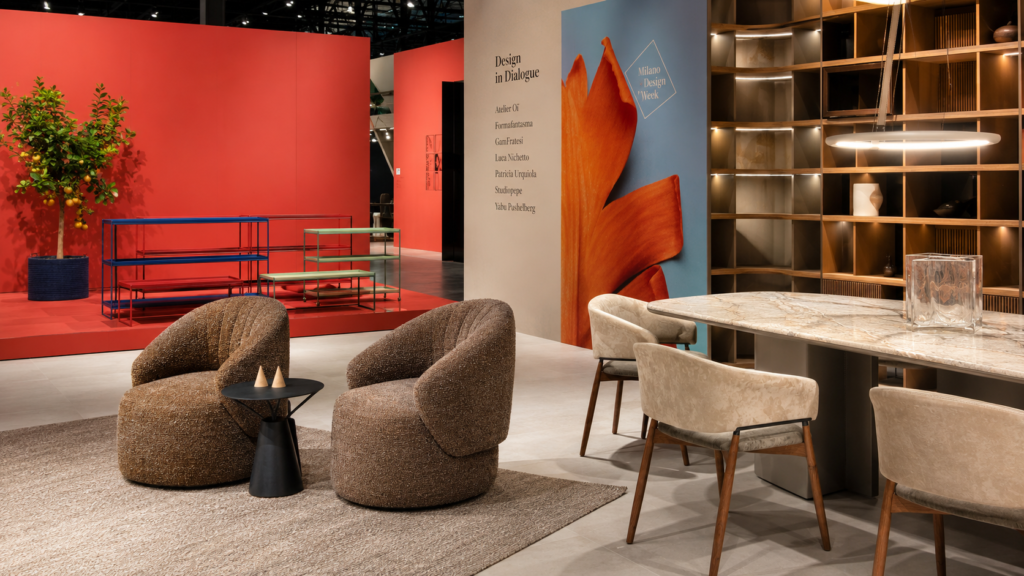
Interior design trends in 2026 are pointing to something deeper than new furniture, colors, or materials. After Salone del Mobile 2026, the internationally recognized design fair held every year in Milan, the direction was clear: modern homes are becoming warmer, more tactile, and more connected to real life.
That is why this article matters to us at FORMA Design Studio. It is not only about following what is new in design but also about understanding how those ideas can help shape homes that feel more personal, more intentional, and more deeply connected to the way people actually live.
Interior design trends 2026 are moving toward warmth, texture, and natural materials
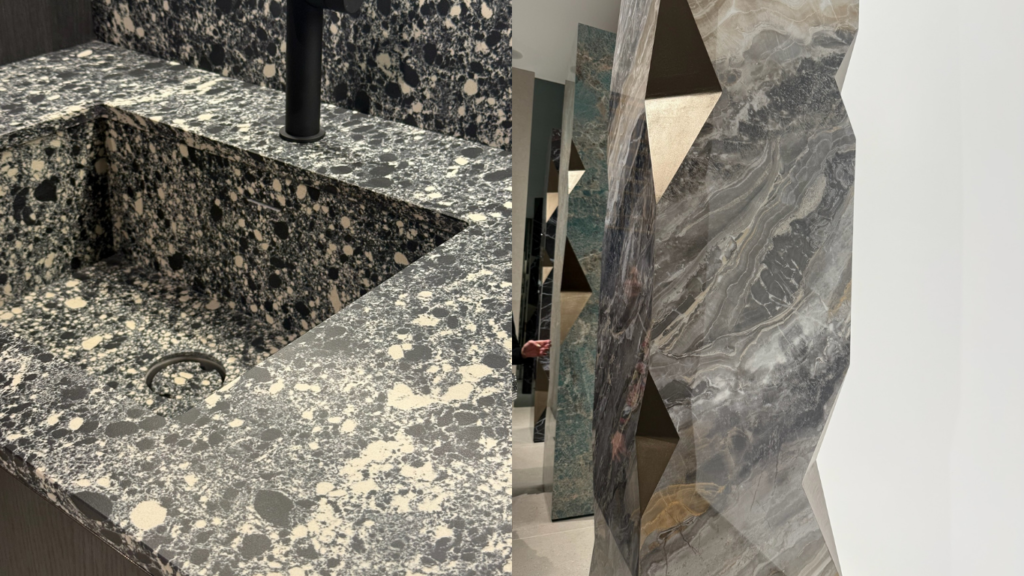
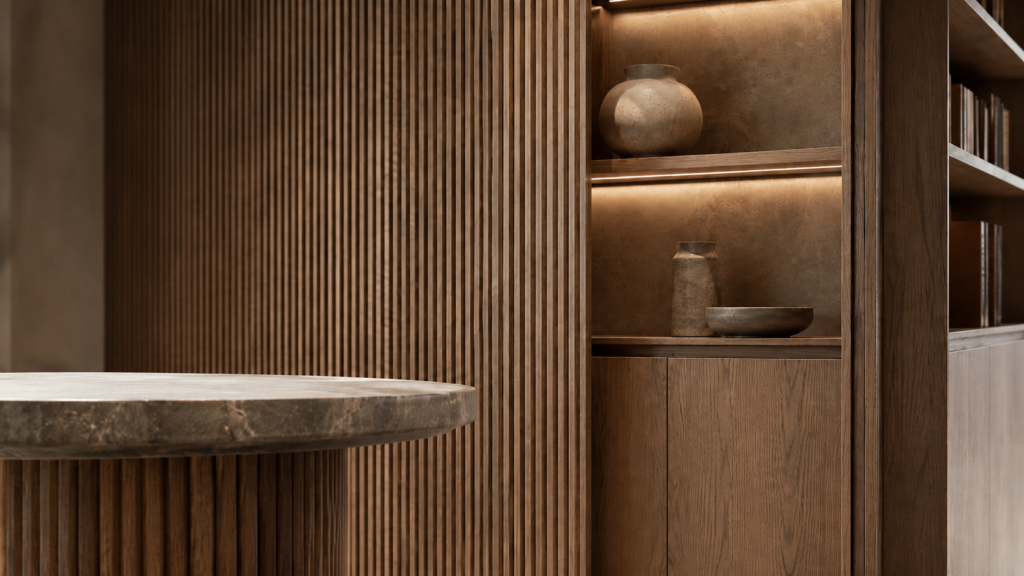
Two materials stood out in Milan this year: open-pore ash wood and travertine. Both pointed to the same idea: interiors are becoming less polished and more tactile.
Ash wood appeared in natural tones and deeper finishes, adding softness, visible grain, and warmth to contemporary spaces. Travertine moved beyond its traditional use on floors and walls, becoming part of furniture, tables, and sculptural bases.
Together with cork, terracotta, linen, and natural fibers, these materials revealed a clear direction: modern interiors are moving toward surfaces that feel honest, grounded, and connected to the physical world.
Warm palettes are redefining modern luxury
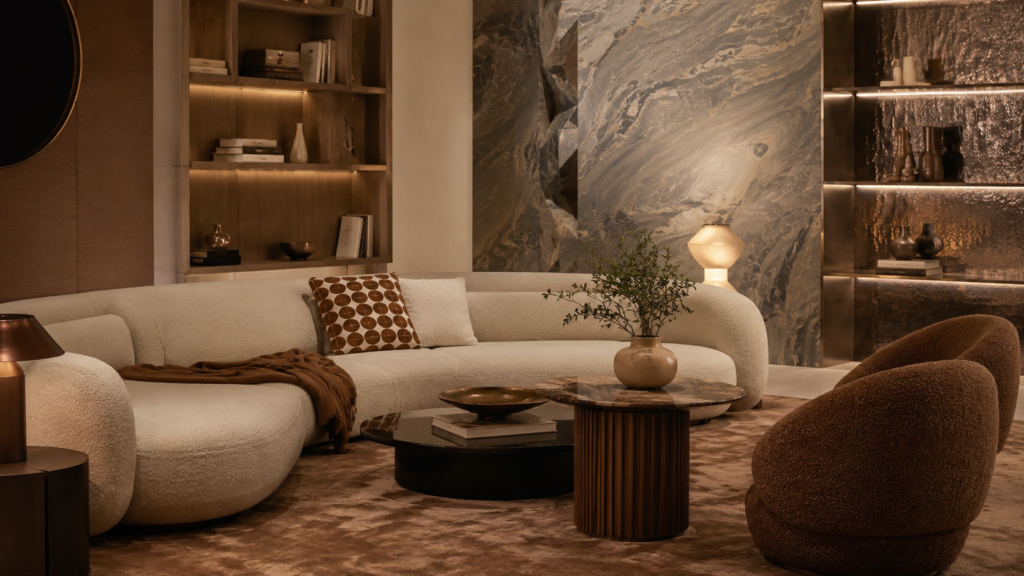
For years, modern interiors often leaned on sharp contrast, cool neutrals, and highly controlled minimalism. Milan suggested a softer direction.
Warm, atmospheric tones appeared across many of the most compelling spaces. Sand, ecru, terracotta, olive green, burgundy, and chocolate brown created interiors that felt layered and inviting rather than cold or overly formal.
This shift is especially relevant in residential design. Luxury today is not only about visual impact. It is also about comfort, depth, and emotional warmth. A well-designed home should feel just as good to live in as it looks in a photograph.
That is one of the strongest ideas behind the interior design trends 2026 conversation: a beautiful home should also feel deeply habitable.
Organic forms are gaining stronger character
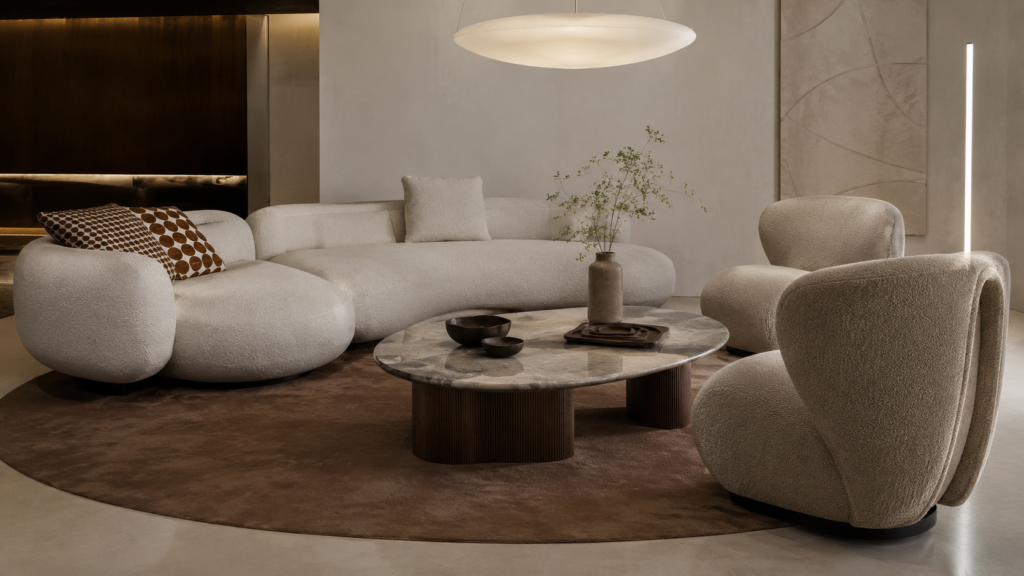
Curves and organic shapes were still very present in Milan, but with more confidence and structure. This was not softness for softness’s sake.
Many of the pieces shown at the fair had sculptural silhouettes, stronger proportions, and architectural bases. Furniture felt less like background and more like a defining part of the space.
That matters because a single well-chosen piece can shift the mood of an entire room. A curved sofa, a rounded table, or a sculptural chair can bring identity without overwhelming the design.
The goal is not to fill a room with statement pieces. It is to choose forms that add presence, balance, and clarity.
Texture is becoming the new language of interiors
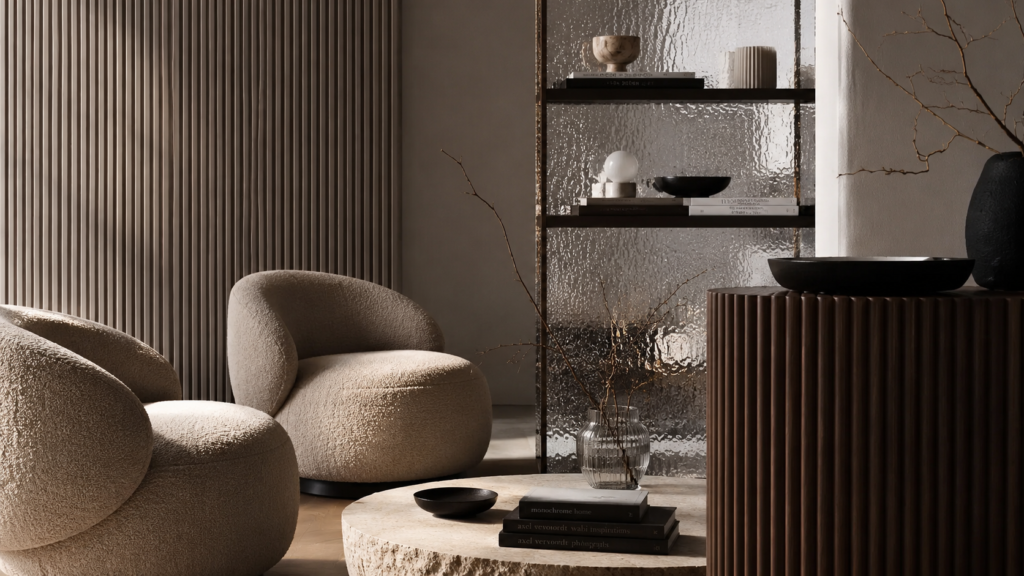
If color led the conversation in previous years, texture now feels like one of the defining languages of design.
Throughout the fair, materials such as bouclé, aged leather, raw linen, matte stone, open-grain wood, and handmade finishes created spaces that felt richer and more layered. The most interesting interiors balanced softness and structure, matte and polished surfaces, refined lines and visible texture.
Texture matters because it gives depth to a room. It is what keeps a neutral space from feeling flat. It allows an interior to feel calm without becoming sterile, and refined without losing warmth.
En FORMA, la textura nunca es un elemento secundario. Forma parte de nuestra concepción de la materialidad desde las primeras etapas de un proyecto.
Durability is becoming a design decision
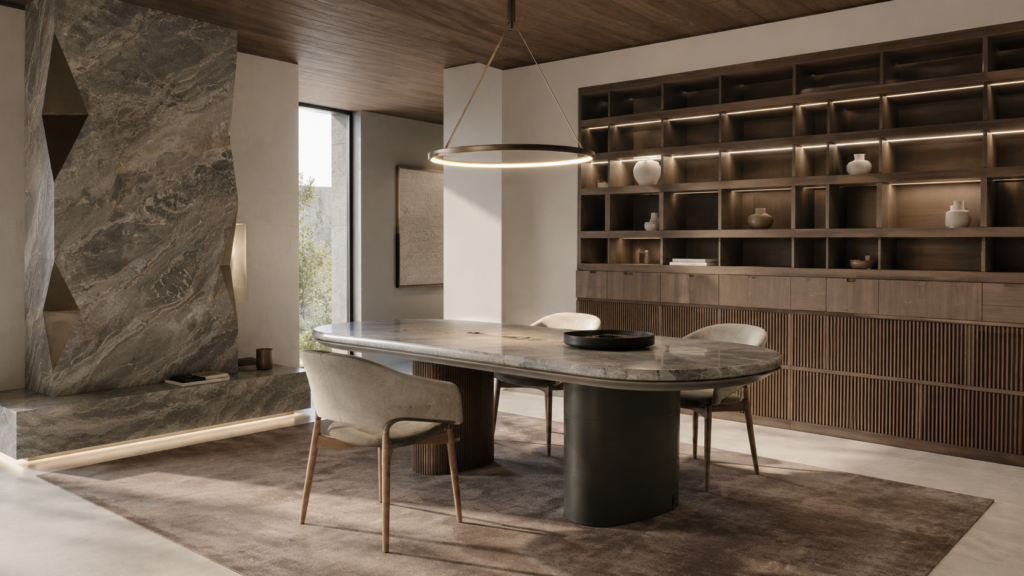
Sustainability at Salone del Mobile 2026 was not presented as a separate category. It was embedded in the idea of good design.
Certified materials, durable finishes, timeless forms, and thoughtful restraint appeared again and again. The message was clear: the best interiors are not built around short-lived trends but around decisions that can age well.
A home designed with longevity in mind often feels more grounded and more valuable over time. Durability is not only a practical concern. It is also a design principle.
This is where sustainability becomes more meaningful. It is not only about selecting better materials. It is about creating spaces that do not need constant reinvention.
What these design shifts mean for your home?
The value of looking at global references like Salone del Mobile is not to copy what appears at the fair. It is to understand the direction of design and translate it in a way that feels meaningful at home.
These shifts point toward spaces that are warmer, more personal, and more intentional. Homes where materials are chosen for both beauty and longevity. Spaces where color creates atmosphere, texture adds depth, and furniture contributes to the identity of the room.
The most relevant interior design trends 2026 are not about chasing novelty. They are about designing homes that feel better to live in.
From Milan to real residential spaces
The clearest takeaway from Milan this year is simple: interiors are becoming warmer, more personal, and more connected to the way people actually live.
At FORMA Design Studio, we see these global design references not as passing trends, but as signals of a broader shift in residential design. Our role is to translate those ideas into spaces with purpose, proportion, and clarity.
If you are thinking about a new home, a renovation, or an interior transformation, we would be happy to start the conversation.